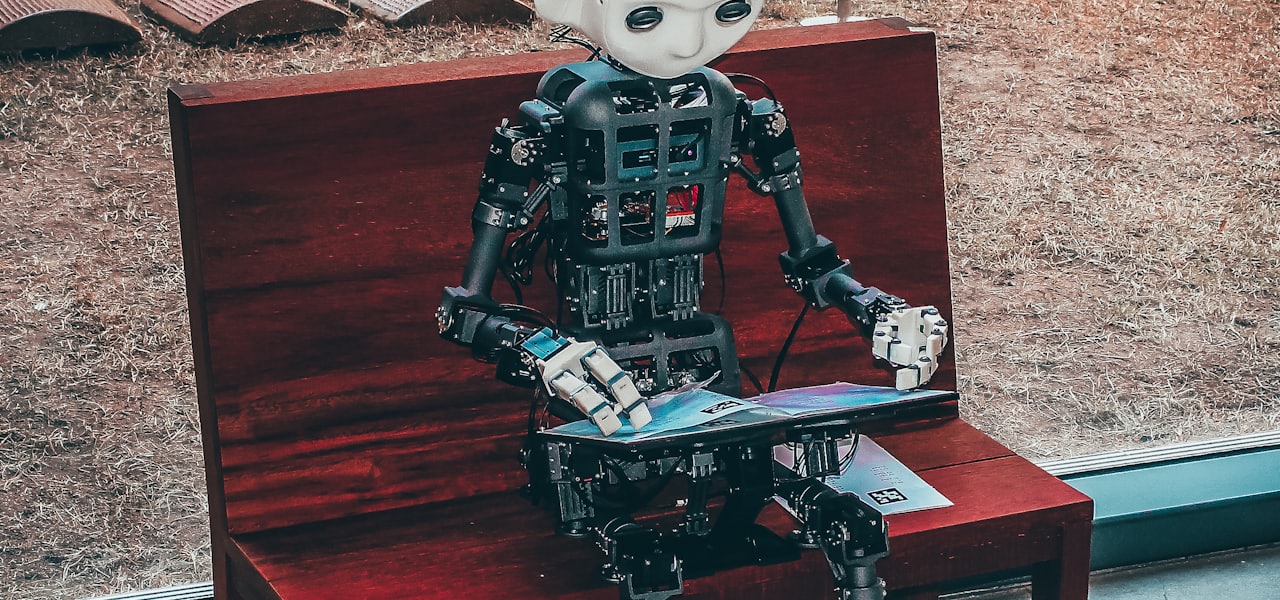
Computational heuristic intelligence (CHI) refers to specialized programming techniques in computational intelligence (also called artificial intelligence, or AI). These techniques have the express goal of avoiding complexity issues, also called NP-hard problems, by using human-like techniques. They are best summarized as the use of exemplar-based methods (heuristics), rather than rule-based methods (algorithms). Hence the term is distinct from the more conventional computational algorithmic intelligence, or symbolic AI. An example of a CHI technique is the encoding specificity principle of Tulving and Thompson. In general, CHI principles are problem solving techniques used by people, rather than programmed into machines. It is by drawing attention to this key distinction that the use of this term is justified in a field already replete with confusing neologisms. Note that the legal systems of all modern human societies employ both heuristics (generalisations of cases) from individual trial records as well as legislated statutes (rules) as regulatory guides. Another recent approach to the avoidance of complexity issues is to employ feedback control rather than feedforward modeling as a problem-solving paradigm. This approach has been called computational cybernetics, because (a) the term 'computational' is associated with conventional computer programming techniques which represent a strategic, compiled, or feedforward model of the problem, and (b) the term 'cybernetic' is associated with conventional system operation techniques which represent a tactical, interpreted, or feedback model of the problem. Of course, real programs and real problems both contain both feedforward and feedback components. A real example which illustrates this point is that of human cognition, which clearly involves both perceptual (bottom-up, feedback, sensor-oriented) and conceptual (top-down, feedforward, motor-oriented) information flows and hierarchies. The AI engineer must choose between mathematical and cybernetic problem solution and machine design paradigms. This is not a coding (program language) issue, but relates to understanding the relationship between the declarative and procedural programming paradigms. The vast majority of STEM professionals never get the opportunity to design or implement pure cybernetic solutions. When pushed, most responders will dismiss the importance of any difference by saying that all code can be reduced to a mathematical model anyway. Unfortunately, not only is this belief false, it fails most spectacularly in many AI scenarios. Mathematical models are not time agnostic, but by their very nature are pre-computed, i.e. feedforward. Dyer [2012] and Feldman [2004] have independently investigated the simplest of all somatic governance paradigms, namely control of a simple jointed limb by a single flexor muscle. They found that it is impossible to determine forces from limb positions- therefore, the problem cannot have a pre-computed (feedforward) mathematical solution. Instead, a top-down command bias signal changes the threshold feedback level in the sensorimotor loop, e.g. the loop formed by the afferent and efferent nerves, thus changing the so-called ‘equilibrium point’ of the flexor muscle/ elbow joint system. An overview of the arrangement reveals that global postures and limb position are commanded in feedforward terms, using global displacements (common coding), with the forces needed being computed locally by feedback loops. This method of sensorimotor unit governance, which is based upon what Anatol Feldman calls the ‘equilibrium Point’ theory, is formally equivalent to a servomechanism such as a car's ‘cruise control’.
Attempto Controlled English
Attempto Controlled English (ACE) is a controlled natural language, i.e. a subset of standard English with a restricted syntax and restricted semantics described by a small set of construction and interpretation rules. It has been under development at the University of Zurich since 1995. In 2013, ACE version 6.7 was announced. ACE can serve as knowledge representation, specification, and query language, and is intended for professionals who want to use formal notations and formal methods, but may not be familiar with them. Though ACE appears perfectly natural—it can be read and understood by any speaker of English—it is in fact a formal language. ACE and its related tools have been used in the fields of software specifications, theorem proving, proof assistants, text summaries, ontologies, rules, querying, medical documentation and planning. Here are some simple examples: Every woman is a human. A woman is a human. A man tries-on a new tie. If the tie pleases his wife then the man buys it. ACE construction rules require that each noun be introduced by a determiner (a, every, no, some, at least 5, ...). Regarding the list of examples above, ACE interpretation rules decide that (1) is interpreted as universally quantified, while (2) is interpreted as existentially quantified. Sentences like "Women are human" do not follow ACE syntax and are consequently not valid. Interpretation rules resolve the anaphoric references in (3): the tie and it of the second sentence refer to a new tie of the first sentence, while his and the man of the second sentence refer to a man of the first sentence. Thus an ACE text is a coherent entity of anaphorically linked sentences. The Attempto Parsing Engine (APE) translates ACE texts unambiguously into discourse representation structures (DRS) that use a variant of the language of first-order logic. A DRS can be further translated into other formal languages, for instance AceRules with various semantics, OWL, and SWRL. Translating an ACE text into (a fragment of) first-order logic allows users to reason about the text, for instance to verify, to validate, and to query it. == Overview == As an overview of the current version 6.6 of ACE this section: Briefly describes the vocabulary Gives an account of the syntax Summarises the handling of ambiguity Explains the processing of anaphoric references. === Vocabulary === The vocabulary of ACE comprises: Predefined function words (e.g. determiners, conjunctions) Predefined phrases (e.g. "it is false that ...", "it is possible that ...") Content words (e.g. nouns, verbs, adjectives, adverbs). === Grammar === The grammar of ACE defines and constrains the form and the meaning of ACE sentences and texts. ACE's grammar is expressed as a set of construction rules. The meaning of sentences is described as a small set of interpretation rules. A Troubleshooting Guide describes how to use ACE and how to avoid pitfalls. ==== ACE texts ==== An ACE text is a sequence of declarative sentences that can be anaphorically interrelated. Furthermore, ACE supports questions and commands. ==== Simple sentences ==== A simple sentence asserts that something is the case—a fact, an event, a state. The temperature is −2 °C. A customer inserts 2 cards. A card and a code are valid. Simple ACE sentences have the following general structure: subject + verb + complements + adjuncts Every sentence has a subject and a verb. Complements (direct and indirect objects) are necessary for transitive verbs (insert something) and ditransitive verbs (give something to somebody), whereas adjuncts (adverbs, prepositional phrases) are optional. All elements of a simple sentence can be elaborated upon to describe the situation in more detail. To further specify the nouns customer and card, we could add adjectives: A trusted customer inserts two valid cards. possessive nouns and of-prepositional phrases: John's customer inserts a card of Mary. or variables as appositions: John inserts a card A. Other modifications of nouns are possible through relative sentences: A customer who is trusted inserts a card that he owns. which are described below since they make a sentence composite. We can also detail the insertion event, e.g. by adding an adverb: A customer inserts some cards manually. or, equivalently: A customer manually inserts some cards. or, by adding prepositional phrases: A customer inserts some cards into a slot. We can combine all of these elaborations to arrive at: John's customer who is trusted inserts a valid card of Mary manually into a slot A. ==== Composite sentences ==== Composite sentences are recursively built from simpler sentences through coordination, subordination, quantification, and negation. Note that ACE composite sentences overlap with what linguists call compound sentences and complex sentences. ===== Coordination ===== Coordination by and is possible between sentences and between phrases of the same syntactic type. A customer inserts a card and the machine checks the code. There is a customer who inserts a card and who enters a code. A customer inserts a card and enters a code. An old and trusted customer enters a card and a code. Note that the coordination of the noun phrases a card and a code represents a plural object. Coordination by or is possible between sentences, verb phrases, and relative clauses. A customer inserts a card or the machine checks the code. A customer inserts a card or enters a code. A customer owns a card that is invalid or that is damaged. Coordination by and and or is governed by the standard binding order of logic, i.e. and binds stronger than or. Commas can be used to override the standard binding order. Thus the sentence: A customer inserts a VisaCard or inserts a MasterCard, and inserts a code. means that the customer inserts a VisaCard and a code, or alternatively a MasterCard and a code. ===== Subordination ===== There are four constructs of subordination: relative sentences, if-then sentences, modality, and sentence subordination. Relative sentences starting with who, which, and that allow to add detail to nouns: A customer who is trusted inserts a card that he owns. With the help of if-then sentences we can specify conditional or hypothetical situations: If a card is valid then a customer inserts it. Note the anaphoric reference via the pronoun it in the then-part to the noun phrase a card in the if-part. Modality allows us to express possibility and necessity: A trusted customer can/must insert a card. It is possible/necessary that a trusted customer inserts a card. Sentence subordination comes in various forms: It is true/false that a customer inserts a card. It is not provable that a customer inserts a card. A clerk believes that a customer inserts a card. ===== Quantification ===== Quantification allows us to speak about all objects of a certain class (universal quantification), or to denote explicitly the existence of at least one object of this class (existential quantification). The textual occurrence of a universal or existential quantifier opens its scope that extends to the end of the sentence, or in coordinations to the end of the respective coordinated sentence. To express that all involved customers insert cards we can write Every customer inserts a card. This sentence means that each customer inserts a card that may, or may not, be the same as the one inserted by another customer. To specify that all customers insert the same card—however unrealistic that situation seems—we can write: A card is inserted by every customer. or, equivalently: There is a card that every customer inserts. To state that every card is inserted by a customer we write: Every card is inserted by a customer. or, somewhat indirectly: For every card there is a customer who inserts it. ===== Negation ===== Negation allows us to express that something is not the case: A customer does not insert a card. A card is not valid. To negate something for all objects of a certain class one uses no: No customer inserts more than 2 cards. or, there is no: There is no customer who inserts a card. To negate a complete statement one uses sentence negation: It is false that a customer inserts a card. These forms of negation are logical negations, i.e. they state that something is provably not the case. Negation as failure states that a state of affairs cannot be proved, i.e. there is no information whether the state of affairs is the case or not. It is not provable that a customer inserts a card. ==== Queries ==== ACE supports two forms of queries: yes/no-queries and wh-queries. Yes/no-queries ask for the existence or non-existence of a specified situation. If we specified: A customer inserts a card. then we can ask: Does a customer insert a card? to get a positive answer. Note that interrogative sentences always end with a question mark. With the help of wh-queries, i.e. queries with query words, we can interrogate a text for details of the specified situation. If we specified: A
Video browsing
Video browsing, also known as exploratory video search, is the interactive process of skimming through video content in order to satisfy some information need or to interactively check if the video content is relevant. While originally proposed to help users inspecting a single video through visual thumbnails, modern video browsing tools enable users to quickly find desired information in a video archive by iterative human–computer interaction through an exploratory search approach. Many of these tools presume a smart user that wants features to interactively inspect video content, as well as automatic content filtering features. For that purpose, several video interaction features are usually provided, such as sophisticated navigation in video or search by a content-based query. Video browsing tools often build on lower-level video content analysis, such as shot transition detection, keyframe extraction, semantic concept detection, and create a structured content overview of the video file or video archive. Furthermore, they usually provide sophisticated navigation features, such as advanced timelines, visual seeker bars or a list of selected thumbnails, as well as means for content querying. Examples of content queries are shot filtering through visual concepts (e.g., only shots showing cars), through some specific characteristics (e.g., color or motion filtering), through user-provided sketches (e.g., a visually drawn sketch), or through content-based similarity search. == History == Video browsing was originally proposed by Iranian engineer Farshid Arman, Taiwanese computer scientist Arding Hsu, and computer scientist Ming-Yee Chiu, while working at Siemens, and it was presented at the ACM International Conference in August 1993. They described a shot detection algorithm for compressed video that was originally encoded with discrete cosine transform (DCT) video coding standards such as JPEG, MPEG and H.26x. The basic idea was that, since the DCT coefficients are mathematically related to the spatial domain and represent the content of each frame, they can be used to detect the differences between video frames. In the algorithm, a subset of blocks in a frame and a subset of DCT coefficients for each block are used as motion vector representation for the frame. By operating on compressed DCT representations, the algorithm significantly reduces the computational requirements for decompression and enables effective video browsing. The algorithm represents separate shots of a video sequence by an r-frame, a thumbnail of the shot framed by a motion tracking region. A variation of this concept was later adopted for QBIC video content mosaics, where each r-frame is a salient still from the shot it represents. === Video Notebook === Modern video browsing solutions include Video Notebook, a Menlo Park startup founded in 2021 by Mike Lanza, which uses computer vision to extract slides and optical character recognition and speech recognition to facilitate video search. The software can be either used on the client side (using a browser extension), where the slides and text are extracted while the video is watched (e.g. on a video platform like YouTube or Udemy), or on the server side. Processed videos, which can be viewed in the Video Notebook web app, feature a video browsing user interface with extracted timestamped slides, a search bar for querying the video (or a collection of videos), and text chapters. Video Notebook customers include organisations like Ernst & Young. === Video Browser Showdown === The Video Browser Showdown (VBS) is an annual live evaluation competition for exploratory video search tools, where international researchers use video browsing tools to solve ad-hoc video search tasks on a moderately large data set as fast as possible. The main goal of the VBS, which started in 2012 at the International Conference on MultiMedia Modeling (MMM), is to advance the performance of video browsing tools. Since 2016, the VBS also collaborates with TRECVID. The aim of the VBS is to evaluate video browsing tools for efficiency at known-item search (KIS) tasks with a well-defined data set in direct comparison to other tools.
Network Abstraction Layer
The Network Abstraction Layer (NAL) is a part of the H.264/AVC and HEVC video coding standards. The main goal of the NAL is the provision of a "network-friendly" video representation addressing "conversational" (video telephony) and "non conversational" (storage, broadcast, or streaming) applications. NAL has achieved a significant improvement in application flexibility relative to prior video coding standards. == Introduction == An increasing number of services and growing popularity of high definition TV are creating greater needs for higher coding efficiency. Moreover, other transmission media such as cable modem, xDSL, or UMTS offer much lower data rates than broadcast channels, and enhanced coding efficiency can enable the transmission of more video channels or higher quality video representations within existing digital transmission capacities. Video coding for telecommunication applications has diversified from ISDN and T1/E1 service to embrace PSTN, mobile wireless networks, and LAN/Internet network delivery. Throughout this evolution, continued efforts have been made to maximize coding efficiency while dealing with the diversification of network types and their characteristic formatting and loss/error robustness requirements. The H.264/AVC and HEVC standards are designed for technical solutions including areas like broadcasting (over cable, satellite, cable modem, DSL, terrestrial, etc.) interactive or serial storage on optical and magnetic devices, conversational services, video-on-demand or multimedia streaming, multimedia messaging services, etc. Moreover, new applications may be deployed over existing and future networks. This raises the question about how to handle this variety of applications and networks. To address this need for flexibility and customizability, the design covers a NAL that formats the Video Coding Layer (VCL) representation of the video and provides header information in a manner appropriate for conveyance by a variety of transport layers or storage media. The NAL is designed in order to provide "network friendliness" to enable simple and effective customization of the use of VCL for a broad variety of systems. The NAL facilitates the ability to map VCL data to transport layers such as: RTP/IP for any kind of real-time wire-line and wireless Internet services. File formats, e.g., ISO MP4 for storage and MMS. H.32X for wireline and wireless conversational services. MPEG-2 systems for broadcasting services, etc. The full degree of customization of the video content to fit the needs of each particular application is outside the scope of the video coding standardization effort, but the design of the NAL anticipates a variety of such mappings. Some key concepts of the NAL are NAL units, byte stream, and packet formats uses of NAL units, parameter sets, and access units. A short description of these concepts is given below. == NAL units == The coded video data is organized into NAL units, each of which is effectively a packet that contains an integer number of bytes. The first byte of each H.264/AVC NAL unit is a header byte that contains an indication of the type of data in the NAL unit. For HEVC the header was extended to two bytes. All the remaining bytes contain payload data of the type indicated by the header. The NAL unit structure definition specifies a generic format for use in both packet-oriented and bitstream-oriented transport systems, and a series of NAL units generated by an encoder is referred to as a NAL unit stream. == NAL Units in Byte-Stream Format Use == Some systems require delivery of the entire or partial NAL unit stream as an ordered stream of bytes or bits within which the locations of NAL unit boundaries need to be identifiable from patterns within the coded data itself. For use in such systems, the H.264/AVC and HEVC specifications define a byte stream format. In the byte stream format, each NAL unit is prefixed by a specific pattern of three bytes called a start code prefix. The boundaries of the NAL unit can then be identified by searching the coded data for the unique start code prefix pattern. The use of emulation prevention bytes guarantees that start code prefixes are unique identifiers of the start of a new NAL unit. A small amount of additional data (one byte per video picture) is also added to allow decoders that operate in systems that provide streams of bits without alignment to byte boundaries to recover the necessary alignment from the data in the stream. Additional data can also be inserted in the byte stream format that allows expansion of the amount of data to be sent and can aid in achieving more rapid byte alignment recovery, if desired. == NAL Units in Packet-Transport System Use == In other systems (e.g., IP/RTP systems), the coded data is carried in packets that are framed by the system transport protocol, and identification of the boundaries of NAL units within the packets can be established without use of start code prefix patterns. In such systems, the inclusion of start code prefixes in the data would be a waste of data carrying capacity, so instead the NAL units can be carried in data packets without start code prefixes. == VCL and Non-VCL NAL Units == NAL units are classified into VCL and non-VCL NAL units. VCL NAL units contain the data that represents the values of the samples in the video pictures. Non-VCL NAL units contain any associated additional information such as parameter sets (important header data that can apply to a large number of VCL NAL units) and supplemental enhancement information (timing information and other supplemental data that may enhance usability of the decoded video signal but are not necessary for decoding the values of the samples in the video pictures). == Parameter Sets == A parameter set contains shared configuration data that is carried in non-VCL NAL units. Parameter sets are typically reused when decoding many coded pictures within a video sequence. Each VCL NAL unit references a picture parameter set (PPS), which in turn references a sequence parameter set (SPS). There are two types of parameter sets: Sequence parameter set (SPS), which specifies mostly constant configuration such as resolution, bit depth, or chroma format. (For a concrete implementation, see FFmpeg's SPS struct.) Picture parameter set (PPS), which applies on top of an SPS, and specifies configuration such as QP offsets. (For a concrete implementation, see FFmpeg's PPS struct.) The sequence and picture parameter-set mechanism decouples the transmission of infrequently changing information from the transmission of coded representations of the values of the samples in the video pictures. Each VCL NAL unit contains an identifier that refers to the content of the relevant picture parameter set and each picture parameter set contains an identifier that refers to the content of the relevant sequence parameter set. In this manner, a small amount of data (the identifier) can be used to refer to a larger amount of information (the parameter set) without repeating that information within each VCL NAL unit. Sequence and picture parameter sets can be sent well ahead of the VCL NAL units that they apply to, and can be repeated to provide robustness against data loss. In some applications, parameter sets may be sent within the channel that carries the VCL NAL units (termed "in-band" transmission). In other applications, it can be advantageous to convey the parameter sets "out-of-band" using a more reliable transport mechanism than the video channel itself. == Access Units == A set of NAL units in a specified form is referred to as an access unit. The decoding of each access unit results in one decoded picture. Each access unit contains a set of VCL NAL units that together compose a primary coded picture. It may also be prefixed with an access unit delimiter to aid in locating the start of the access unit. Some supplemental enhancement information containing data such as picture timing information may also precede the primary coded picture. The primary coded picture consists of a set of VCL NAL units consisting of slices or slice data partitions that represent the samples of the video picture. Following the primary coded picture may be some additional VCL NAL units that contain redundant representations of areas of the same video picture. These are referred to as redundant coded pictures, and are available for use by a decoder in recovering from loss or corruption of the data in the primary coded pictures. Decoders are not required to decode redundant coded pictures if they are present. Finally, if the coded picture is the last picture of a coded video sequence (a sequence of pictures that is independently decodable and uses only one sequence parameter set), an end of sequence NAL unit may be present to indicate the end of the sequence; and if the coded picture is the last coded picture in the entire NAL unit stream, an end of stream NAL unit may be present to
Vujak
VuJak is an early video sampler, a VJ remix and mashup tool created in 1992 by Brian Kane, Lisa Eisenpresser, and Jay Haynes. The original name of the project was Mideo, but it was later changed to VuJak. VuJak was based on MIDI control of video in real-time. It was created with MAX from Opcode Systems, and utilized the newly released QuickTime 1.0 movie object. The first working version of the program was built on a Mac IIfx with 8 megs of ram, and could jump in real-time across a 160 x 120 pixel QuickTime movie via a midi keyboard. Later versions could manipulate full screen video, included the first real-time video scratch feature, had looping, vari-speed, and random play features, and allowed for recording and editing of video sequences within the application. VuJak also had networking capabilities which allowed artists to "jam" in real time across standard phone lines. The first public exhibition of VuJak was at the Digital Hollywood conference in Beverly Hills in 1993, where it was promoted by Timothy Leary. VuJak was featured in Mondo 2000, CBS Evening News, Wired Magazine, Electronic Musician, Billboard Magazine, The Hollywood Reporter, and it was used to create promotional videos for MTV. In 1994, VuJak was a featured interactive exhibition at the Exploratorium in San Francisco. Development of VuJak ceased in 1995.
Data preprocessing
Data preprocessing can refer to manipulation, filtration or augmentation of data before it is analyzed, and is often an important step in the data mining process. Data collection methods are often loosely controlled, resulting in out-of-range values, impossible data combinations, and missing values, amongst other issues. Preprocessing is the process by which unstructured data is transformed into intelligible representations suitable for machine-learning models. This phase of model deals with noise in order to arrive at better and improved results from the original data set which was noisy. This dataset also has some level of missing value present in it. The preprocessing pipeline used can often have large effects on the conclusions drawn from the downstream analysis. Thus, representation and quality of data is necessary before running any analysis. If there is a high proportion of irrelevant and redundant information present or noisy and unreliable data, then knowledge discovery during the training phase may be more difficult. Data preparation and filtering steps can take a considerable amount of processing time. Examples of methods used in data preprocessing include cleaning, instance selection, normalization, one-hot encoding, data transformation, feature extraction and feature selection. == Applications == === Data mining === Data preprocessing allows for the removal of unwanted data with the use of data cleaning, this allows the user to have a dataset to contain more valuable information after the preprocessing stage for data manipulation later in the data mining process. Editing such dataset to either correct data corruption or human error is a crucial step to get accurate quantifiers like true positives, true negatives, false positives and false negatives found in a confusion matrix that are commonly used for a medical diagnosis. Users are able to join data files together and use preprocessing to filter any unnecessary noise from the data which can allow for higher accuracy. Users use Python programming scripts accompanied by the pandas library which gives them the ability to import data from a comma-separated values as a data-frame. The data-frame is then used to manipulate data that can be challenging otherwise to do in Excel. Pandas (software) which is a powerful tool that allows for data analysis and manipulation; which makes data visualizations, statistical operations and much more, a lot easier. Many also use the R programming language to do such tasks as well. The reason why a user transforms existing files into a new one is because of many reasons. Aspects of data preprocessing may include imputing missing values, aggregating numerical quantities and transforming continuous data into categories (data binning). More advanced techniques like principal component analysis and feature selection are working with statistical formulas and are applied to complex datasets which are recorded by GPS trackers and motion capture devices. === Semantic data preprocessing === Semantic data mining is a subset of data mining that specifically seeks to incorporate domain knowledge, such as formal semantics, into the data mining process. Domain knowledge is the knowledge of the environment the data was processed in. Domain knowledge can have a positive influence on many aspects of data mining, such as filtering out redundant or inconsistent data during the preprocessing phase. Domain knowledge also works as constraint. It does this by using working as set of prior knowledge to reduce the space required for searching and acting as a guide to the data. Simply put, semantic preprocessing seeks to filter data using the original environment of said data more correctly and efficiently. There are increasingly complex problems which are asking to be solved by more elaborate techniques to better analyze existing information. Instead of creating a simple script for aggregating different numerical values into a single value, it make sense to focus on semantic based data preprocessing. The idea is to build a dedicated ontology, which explains on a higher level what the problem is about. In regards to semantic data mining and semantic pre-processing, ontologies are a way to conceptualize and formally define semantic knowledge and data. The Protégé (software) is the standard tool for constructing an ontology. In general, the use of ontologies bridges the gaps between data, applications, algorithms, and results that occur from semantic mismatches. As a result, semantic data mining combined with ontology has many applications where semantic ambiguity can impact the usefulness and efficiency of data systems. Applications include the medical field, language processing, banking, and even tutoring, among many more. There are various strengths to using a semantic data mining and ontological based approach. As previously mentioned, these tools can help during the per-processing phase by filtering out non-desirable data from the data set. Additionally, well-structured formal semantics integrated into well designed ontologies can return powerful data that can be easily read and processed by machines. A specifically useful example of this exists in the medical use of semantic data processing. As an example, a patient is having a medical emergency and is being rushed to hospital. The emergency responders are trying to figure out the best medicine to administer to help the patient. Under normal data processing, scouring all the patient’s medical data to ensure they are getting the best treatment could take too long and risk the patients’ health or even life. However, using semantically processed ontologies, the first responders could save the patient’s life. Tools like a semantic reasoner can use ontology to infer the what best medicine to administer to the patient is based on their medical history, such as if they have a certain cancer or other conditions, simply by examining the natural language used in the patient's medical records. This would allow the first responders to quickly and efficiently search for medicine without having worry about the patient’s medical history themselves, as the semantic reasoner would already have analyzed this data and found solutions. In general, this illustrates the incredible strength of using semantic data mining and ontologies. They allow for quicker and more efficient data extraction on the user side, as the user has fewer variables to account for, since the semantically pre-processed data and ontology built for the data have already accounted for many of these variables. However, there are some drawbacks to this approach. Namely, it requires a high amount of computational power and complexity, even with relatively small data sets. This could result in higher costs and increased difficulties in building and maintaining semantic data processing systems. This can be mitigated somewhat if the data set is already well organized and formatted, but even then, the complexity is still higher when compared to standard data processing. Below is a simple a diagram combining some of the processes, in particular semantic data mining and their use in ontology. The diagram depicts a data set being broken up into two parts: the characteristics of its domain, or domain knowledge, and then the actual acquired data. The domain characteristics are then processed to become user understood domain knowledge that can be applied to the data. Meanwhile, the data set is processed and stored so that the domain knowledge can applied to it, so that the process may continue. This application forms the ontology. From there, the ontology can be used to analyze data and process results. Fuzzy preprocessing is another, more advanced technique for solving complex problems. Fuzzy preprocessing and fuzzy data mining make use of fuzzy sets. These data sets are composed of two elements: a set and a membership function for the set which comprises 0 and 1. Fuzzy preprocessing uses this fuzzy data set to ground numerical values with linguistic information. Raw data is then transformed into natural language. Ultimately, fuzzy data mining's goal is to help deal with inexact information, such as an incomplete database. Currently fuzzy preprocessing, as well as other fuzzy based data mining techniques see frequent use with neural networks and artificial intelligence.
Microscope image processing
Microscope image processing is a broad term that covers the use of digital image processing techniques to process, analyze and present images obtained from a microscope. Such processing is now commonplace in a number of diverse fields such as medicine, biological research, cancer research, drug testing, metallurgy, etc. A number of manufacturers of microscopes now specifically design in features that allow the microscopes to interface to an image processing system. == Image acquisition == Until the early 1990s, most image acquisition in video microscopy applications was typically done with an analog video camera, often simply closed circuit TV cameras. While this required the use of a frame grabber to digitize the images, video cameras provided images at full video frame rate (25-30 frames per second) allowing live video recording and processing. While the advent of solid state detectors yielded several advantages, the real-time video camera was actually superior in many respects. Today, acquisition is usually done using a CCD camera mounted in the optical path of the microscope. The camera may be full colour or monochrome. Very often, very high resolution cameras are employed to gain as much direct information as possible. Cryogenic cooling is also common, to minimise noise. Often digital cameras used for this application provide pixel intensity data to a resolution of 12-16 bits, much higher than is used in consumer imaging products. Ironically, in recent years, much effort has been put into acquiring data at video rates, or higher (25-30 frames per second or higher). What was once easy with off-the-shelf video cameras now requires special, high speed electronics to handle the vast digital data bandwidth. Higher speed acquisition allows dynamic processes to be observed in real time, or stored for later playback and analysis. Combined with the high image resolution, this approach can generate vast quantities of raw data, which can be a challenge to deal with, even with a modern computer system. While current CCD detectors allow very high image resolution, often this involves a trade-off because, for a given chip size, as the pixel count increases, the pixel size decreases. As the pixels get smaller, their well depth decreases, reducing the number of electrons that can be stored. In turn, this results in a poorer signal-to-noise ratio. For best results, one must select an appropriate sensor for a given application. Because microscope images have an intrinsic limiting resolution, it often makes little sense to use a noisy, high resolution detector for image acquisition. A more modest detector, with larger pixels, can often produce much higher quality images because of reduced noise. This is especially important in low-light applications such as fluorescence microscopy. Moreover, one must also consider the temporal resolution requirements of the application. A lower resolution detector will often have a significantly higher acquisition rate, permitting the observation of faster events. Conversely, if the observed object is motionless, one may wish to acquire images at the highest possible spatial resolution without regard to the time required to acquire a single image. == 2D image techniques == Image processing for microscopy application begins with fundamental techniques intended to most accurately reproduce the information contained in the microscopic sample. This might include adjusting the brightness and contrast of the image, averaging images to reduce image noise and correcting for illumination non-uniformities. Such processing involves only basic arithmetic operations between images (i.e. addition, subtraction, multiplication and division). The vast majority of processing done on microscope image is of this nature. Another class of common 2D operations called image convolution are often used to reduce or enhance image details. Such "blurring" and "sharpening" algorithms in most programs work by altering a pixel's value based on a weighted sum of that and the surrounding pixels (a more detailed description of kernel based convolution deserves an entry for itself) or by altering the frequency domain function of the image using Fourier Transform. Most image processing techniques are performed in the Frequency domain. Other basic two dimensional techniques include operations such as image rotation, warping, color balancing etc. At times, advanced techniques are employed with the goal of "undoing" the distortion of the optical path of the microscope, thus eliminating distortions and blurring caused by the instrumentation. This process is called deconvolution, and a variety of algorithms have been developed, some of great mathematical complexity. The end result is an image far sharper and clearer than could be obtained in the optical domain alone. This is typically a 3-dimensional operation, that analyzes a volumetric image (i.e. images taken at a variety of focal planes through the sample) and uses this data to reconstruct a more accurate 3-dimensional image. == 3D image techniques == Another common requirement is to take a series of images at a fixed position, but at different focal depths. Since most microscopic samples are essentially transparent, and the depth of field of the focused sample is exceptionally narrow, it is possible to capture images "through" a three-dimensional object using 2D equipment like confocal microscopes. Software is then able to reconstruct a 3D model of the original sample which may be manipulated appropriately. The processing turns a 2D instrument into a 3D instrument, which would not otherwise exist. In recent times this technique has led to a number of scientific discoveries in cell biology. == Analysis == Analysis of images will vary considerably according to application. Typical analysis includes determining where the edges of an object are, counting similar objects, calculating the area, perimeter length and other useful measurements of each object. A common approach is to create an image mask which only includes pixels that match certain criteria, then perform simpler scanning operations on the resulting mask. It is also possible to label objects and track their motion over a series of frames in a video sequence.